
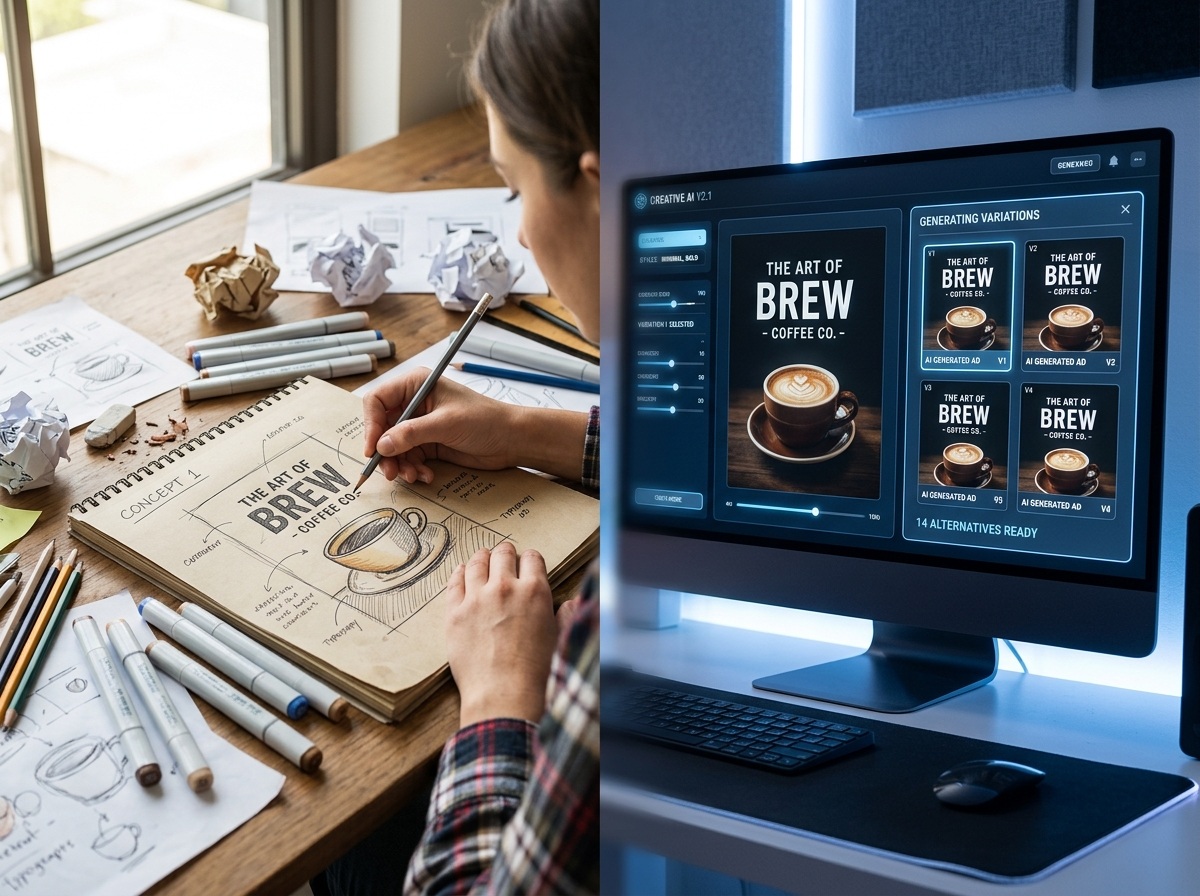
Remember when advertising felt like it was made by actual people? Weird phrasing choices, imperfect layouts, the occasional typo that somehow made it more human? Yeah, those days are fading fast.
I work in marketing, and I’m watching this shift happen in real time. And it’s not as simple as “AI good” or “AI bad.” It’s messier, more interesting, and honestly a bit unsettling.
The Handmade Era (And Why It Actually Mattered)
For decades, advertising was a craft. A designer would sit down, sketch concepts, iterate, second guess themselves. A copywriter would workshop headlines for hours. Someone would look at it with fresh eyes and say, “This doesn’t feel right,” and they’d start over.
That friction that human struggle came through in the final product. There was intention. Personality. Even bad ads had character because they were made by actual people wrestling with actual problems.
And here’s the thing: customers could feel it. They knew someone had sweated over that campaign. Sometimes they hated it anyway, but at least it felt authentic. There was a human on the other side of the message.
The AI Takeover (Spoiler: It's Happening Fast)
Now? It’s 2026, and I can generate a full advertising campaign, copy, images, video concepts in about twenty minutes. Not by hiring a team of creatives. By writing prompts into an AI system.
The temptation is real. Why pay a designer two weeks to create mockups when you can generate fifty variations in an afternoon? Why hire a copywriter when an AI can churn out headlines that are technically correct, optimized for engagement, tailored to your target demographic?
So companies are doing it. A lot of them.
And the results? They’re… fine. Often good, even. Technically sound. Optimized to hell. Missing something intangible that’s weirdly hard to articulate but impossible to ignore once you see it.
What We Actually Lost (Besides Jobs)
Here’s what keeps me up at night: when everything is optimized for algorithms, nothing is optimized for humans anymore.
AI-generated ads are good at hitting metrics. Click-through rates. Engagement. Conversions. They’re engineered to work. But they’re also increasingly indistinguishable from each other. They feel safe. Corporate. Like they came from a playbook instead of a person’s brain.
AI-generated ads are good at hitting metrics. Click-through rates. Engagement. Conversions. They’re engineered to work. But they’re also increasingly indistinguishable from each other. They feel safe. Corporate. Like they came from a playbook instead of a person’s brain.
And customers are noticing. Not consciously, maybe. But there’s a growing sense that ads are getting worse even though they’re technically getting better.
The other thing? Authenticity became valuable precisely because it’s scarce now. When handmade feels rare, people start gravitating toward it. It signals that someone actually cared enough to do the work.
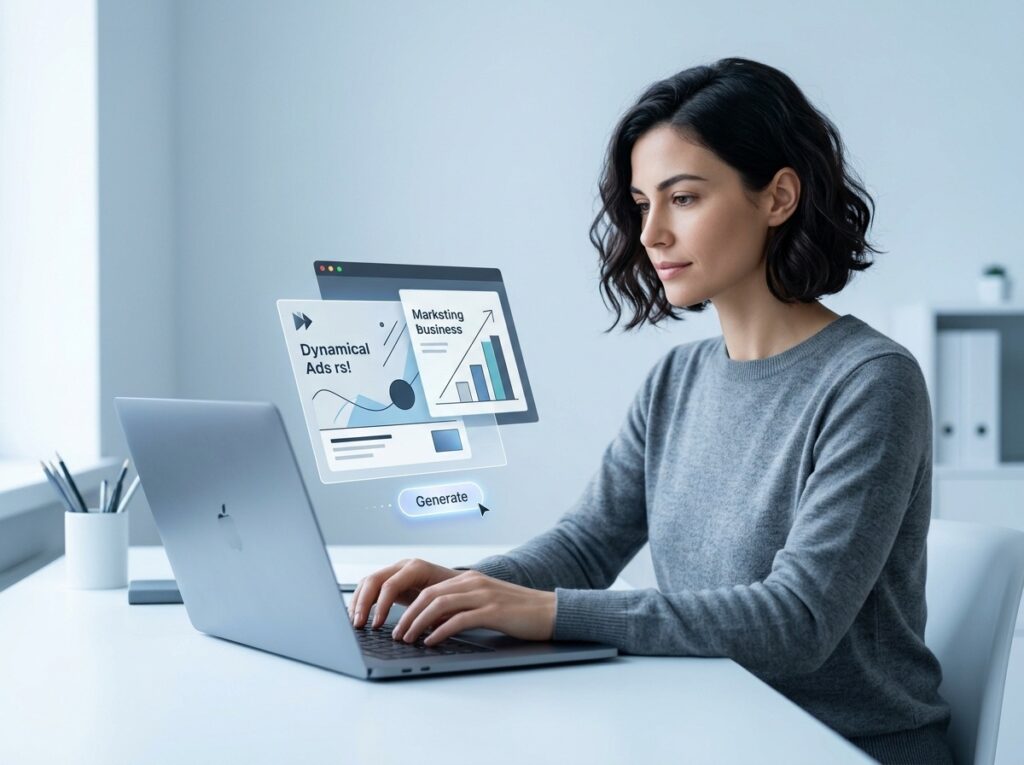
The Crazy Part: Customers Have More Power Than Ever
But here’s where it gets interesting for you as a buyer: you’ve actually got more leverage in this moment.
When advertising becomes commodified when anyone can generate a decent ad in minutes, the barrier to entry drops. That means smaller brands with tiny budgets can suddenly compete with massive corporations. A one-person operation can create ads that look as polished as something from a Fortune 500 company.
The playing field flattened. Temporarily.
But it also means you’re drowning in noise. Thousands of brands are now able to advertise because it’s cheap and easy. Your inbox is fuller. Your social feeds are more cluttered. The signal-to-noise ratio is getting worse.
So what do you do? You tune out. You use ad blockers. You follow creators instead of brands. You trust reviews from real people more than official marketing. You demand authenticity precisely because it’s getting harder to find.
This is actually power. You’re voting with your attention, and brands that understand this are doubling down on the human element—real customers, authentic stories, people who actually use the product. The things AI can’t fake.
The Weird Future We're Building
The real play for brands right now isn’t full automation. It’s augmentation. Use AI to speed up the boring parts (resizing images, generating initial drafts, optimizing copy for different platforms). But keep humans in the loop for the parts that actually matter—strategy, voice, creative direction, emotional resonance.
The brands winning aren’t the ones going full-AI or stubbornly refusing to use it. They’re the ones smart enough to use it as a tool instead of a replacement.
But that requires resisting the urge to cut corners entirely. And not every company has the discipline or budget to do that.
What This Means for Your Wallet
From a customer perspective? Stay skeptical. If an ad feels hollow, generic, like it could sell anything to anyone it probably came from an algorithm. That’s your signal to dig deeper before buying.
Look for brands where you can tell actual humans are involved. Not because handmade is always better, but because it usually means someone cared about more than just hitting a conversion rate.
And support the ones doing the work. The designers still sketching. The copywriters still agonizing over language. The brands that treat advertising like a craft instead of a process to optimize away.
Because every dollar you spend teaches the market what matters to you. And right now? A lot of us are collectively saying: Show us something that feels real.
That’s more powerful than any algorithm.
Advertising hasn’t just changed it’s fundamentally split. There’s the fast, cheap, optimized stuff. And there’s the increasingly rare, increasingly valuable work that still has a human fingerprint on it.
You get to choose which one you reward with your attention and money.
Me? I’m paying attention to which companies are still willing to do the work. And I’m rooting for them, because the alternative, a world where every ad is a soulless optimization sounds exhausting for everyone.
